Commander Overview
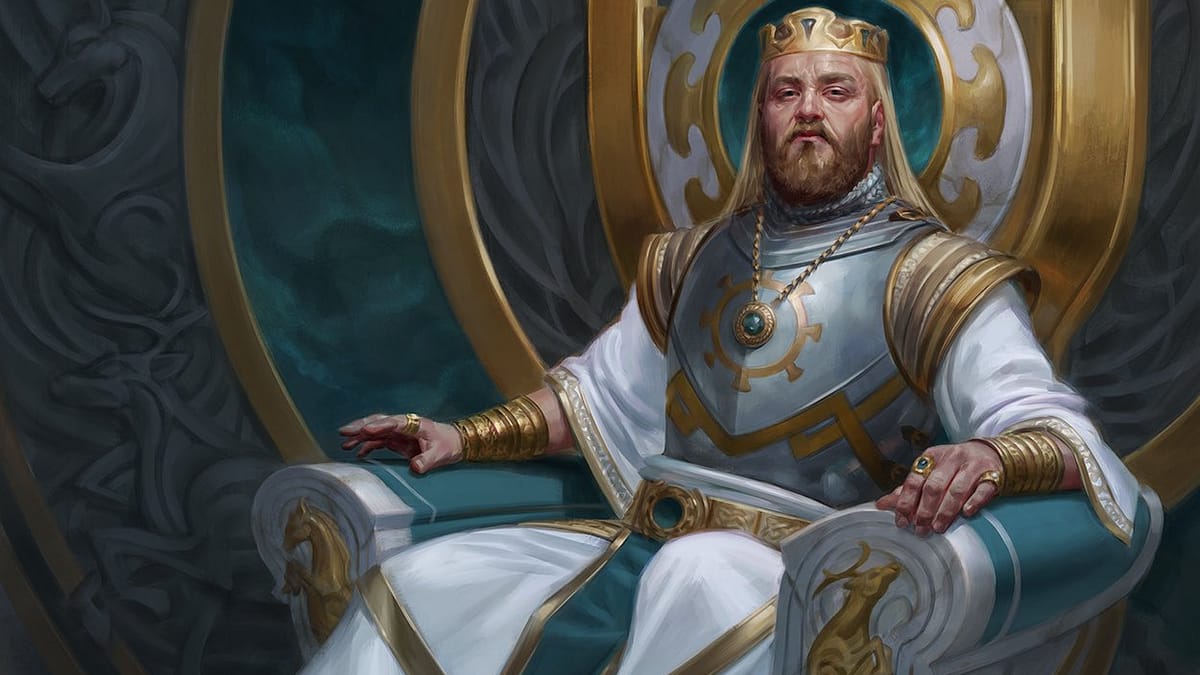
Kenrith is a powerhouse of a commander, from EDH to CEDH, Kenrith is a true toolbox! One of our readers requested a group hug and a politics-focused deck that used Kenrith as both an asset for ourselves and our opponents. Combine that with all of our group hugs and political play cards. We truly play this deck like we are a king, giving a lot to our other opponents and accelerating their game plan. At the same time, we sit back and use our political goodwill and cards like Ghostly Prison and Propaganda to “suggest” our opponents don’t mess with us, we are helping the whole table here, right? While our opponents sit and kill each other, we watch the board like a true kings and prepare for a very sneaky win. Kenrith is a big part of this effort, and using it to help our opponents or ourselves is wise. We can build a lot of political goodwill with our opponents’ five life, or maybe a card, or even some trample and haste for their creatures! This deck is all about being as political as possible and building up our opponents’ boards and then using some of our big cards to get a sneaky win.
Kenrith is an extremely important asset for our deck, their abilities are just great, and with cards like Biomancer's Familiar and Zirda, the Dawnwaker we can lower the costs of Kenrith’s most expensive abilities. Kenrith’s abilities, like most things in this deck, can be used as a political tool and are great for us. Exchanging the card draw ability for not being attacked or giving an opponent’s creatures trample and haste can allow us to pit our opponents against each other, which is perfect for a politically focused deck like this! Kenrith’s abilities can also be good for us, helping us with card draw, making our creatures trample and haste, just a great toolbox card for our deck. Whether we use them for ourselves or others, Kenrith is an amazing leader for this deck.
EDH BRACKET
Beyond the strength of an average precon deck.
- Late Game 2-Card Infinite Combos
- No Mass Land Denial
- Up to 3 Game Changers
- No Chaining Extra Turns
How to Play the Deck
This deck plays a lot different than many EDH decks, we are not focused on attacking and we spend a lot of the game helping our opponents and lightly “suggesting” our opponents dont attack us, we do this with straightforward cards like Ghostly Prison but we can also politic our way into not being attacked, we also have cards that encourage our opponents to attack each other like Curse of Opulence and Gahiji, Honored One, these are great ways for us to make our opponents attack each other and not us.
Synergy’s in the deck
We have a lot of synergies in the deck, one of the biggest is disincentivizing our opponents from attacking us. We are a deck that’s for the whole table, and because of that, we only help and don’t want to be attacked. Ghostly Prison and Propaganda are both great ways to prevent opponents from attacking, as well as Windborn Muse. All these cards can be exceptionally effective against creature-heavy strategies and decks that want to go wide. We also have cards that can skew our opponents’ decisions like Combat Calligrapher, which can cause a lot of chaos in the game, but that chaos can’t attack us!
Phases of the Game
Early-Game: We actually are pretty good at the early-game, well, we are actually better at helping both us and our opponents get out of the early-game, with cards like Heartbeat of Spring and Rites of Flourishing accelerating the game for everyone, and we hope we can use this goodwill to not be attacked early. We don’t do a ton here; we get our group-hug elements in as much as we can and are neutral overall. These early group hugs can help us build some political goodwill with our opponents.
Mid-Game: This is when we start to get very political, making deals and sometimes breaking them, and helping the whole board grow. We are very interested in building up our opponents’ boards and letting them do the majority of the fighting for us.
Late-Game: This is when we typically stop being the nice guy, once our opponents are nice and big, and hopefully they have taken out at least one of our opponents, and this is where we strike, using cards like Insurrection to end the game. Timing is still very important here; we don’t want to overextend and not be able to kill an opponent. We would much prefer the remaining opponents fight it out, and then we can swoop in and grab the win.
Card Breakdowns
Ramp
We don’t have much traditional ramp aside from Kodama's Reach and Cultivate, but cards like New Frontiers and Collective Voyage allow us to get out a ton of lands and help our opponents. Both of these cards help us build goodwill and start our opponents’ game plan early, getting them fighting early. Mana Flare, Rites of Flourishing, and Heartbeat of Spring all help us ramp and help our opponents, which is great for our deck. Even though a lot of our ramp is shared, helping everyone at the table aligns with our game plan and is something we want. We have a simple land base in this deck. Because of that, we have cards that aren’t strictly ramp but do provide some much-needed mana fixing like Prismatic Omen, Chromatic Lantern, and Dryad of the Ilysian Grove. Mana fixing doesn’t help us ramp that much, but it does help us overall.
Card Draw/Card Advantage
We have a surprising amount of card draw. Kenrith is a consistent source of card draw for us, and we can use Kenrith’s card draw to help opponents, too. Kenrith’s card draw can be a bit pricey, but with cards like Biomancer's Familiar and Zirda, the Dawnwaker, it can make that cheaper, and it is repeatable, so in the mid-late game, we can use it a lot. We do have some card draw that fits very well with the group hug theme, like Secret Rendezvous, which I often use on whoever is strongest, as we can use their power to our advantage.
Removal
We are pretty good at removing stuff. Still, we don’t always like too, this is another aspect in the deck that feeds into our politics, we have removal like Beast Within and Chaos Warp but we can always tell an opponent “I don’t have to use it if you dont attack or mess with me” which is very powerful, in games where i do threaten removal i do always make sure to go through with it because empty threats can be quite bad in a political focused deck like this. If an opponent does decide to attack us, we do have answers like Cyclonic Rift, which can devastate our opponents boards or Settle the Wreckage which is strong because of the exile and typically by the point we cast this card we don’t care about our opponents grabbing basics, we probably already gave them a bunch anyway. One of the most important aspects of our deck is leveraging our removal as a political piece.
Protection
We don’t have much protection for our creatures, but we do have a lot of protection for ourselves. While pricey, I really do like Blazing Archon, which can be very strong in the late-game when there are only a couple of players left. And if an opponent decides to go wide on us we can get a lot of value and blockers from Kazuul, Tyrant of the Cliffs, if Kazuul fails we can always rely on Spore Frog which also disincentivizes opponents from attacking us since they know we can activate it, also a great political tool for the deck allowing us to use preventing combat damage as a political piece to convince our opponents to leave us alone.
Utility / Support
While we love our political elements, let’s focus on some of our group hug elements! Evolutionary Escalation is a very cool card that can buff up our creatures and opponents, a very cool card for the deck. I also really like both Ghirapur Orrery and Howling Mine, both great ways to help the whole table. Orzhov Advokist is another cool group hug card that helps us a ton, and more importantly, if an opponent doesn’t take the counters, we can assume they may attack us. This information can be extremely helpful for deciding what we do on our turn and what kind of mana we leave up. Split Decision is one of the coolest and silliest cards in our deck, having our opponents choose whether we counter or copy a spell is so much fun, and with the political goodwill we’ve built throughout the game, we typically are able to influence our opponents to do what we want. A wonderfully chaotic card that can be game-changing.
Mana Base
Our mana base is nothing too special, a lot of basics which are made better by cards like Chromatic Lantern and Prismatic Omen and some good taplands for all three colors. I had no trouble with this mana base in testing, thirty-six is a good number for the deck and with all of our ways to make our stuff tap for anything I didn’t have any trouble with this landbase.
This deck request included a budget, so we did shave down a lot of the landbase, as five-color landbases can get very pricey. If you are looking to upgrade, adding the bond lands like Spectator Seating as well as shocks/fetches and triomes would help a lot. Not something you have to do, but it would improve the mana base overall.
Win Conditions
Even though we are a group hug deck and do accelerate our opponents’ boards a lot, we are not a deck that goes for second place. While in some games it may end up like that, we do try to win and have quite a few ways to do so. Our primary win condition is usually Insurrection; we’ve helped our opponents build so much, and we steal it all and swing hard. This can be hard to kill everyone at once, but it is great in a two-person standing situation and against heavy creature decks, which are pretty common in the format. Reins of Power is another card that does a similar effect, but we give our opponents our creatures, so be mindful of that if we have a decent board.
Another way we can end the game is Approach of the Second Sun. While it is pricey, we can use Kenrith’s ability here to draw cards and get closer. This is a good approach for long games or more control-heavy games, but it is not always the best option. All eyes typically go to you when you cast this, as almost all opponents know you will be going for a win soon!
While not something I’ve been able to pull off a ton Triskaidekaphile is a win-con for the deck, we have quite a bit of card draw, and with Kenrith’s ability and some of our cost reducers for their abilities we can get to thirteen pretty easily.
Lastly, one of our win conditions can be combat. Combat is not the typical route we take, but we do have some good creatures, and with all of the group hugging we do for our opponents, most of our opponents will be at a pretty low life total. While not our first option, it is an option for us.
We have a lot more win conditions than many of our opponents would expect. One of the biggest strengths of our deck is that, since our opponents usually take each other out, we only have to deal with one or two opponents, typically, allowing our win conditions to be much more effective. This is rarely a deck that can kill all three opponents at once, but we thrive when there are only one or two opponents left. We have a lot more win conditions than most group hug decks have.
Strengths of the Deck
We are often very “sneaky”, allowing our opponents to destroy each other while we wait for the perfect time to strike.
We are very good at building political goodwill with our opponents
Weaknesses of the Deck
We can have a tough matchup against very aggressive decks. Our deck is quite slow and can get run over by aggressive decks.
Control decks can be tough for us, especially when we try to resolve something like Insurrection.
Deck Testing/Matchups
I tested this deck against three different decks
Game 1: Vs Tannuk, Steadfast Second. Matchup Record: 4-1
I liked this matchup a lot, our group hug stuff makes most Tannuk decks pretty happy, and they typically don’t mess with us that much. This is a matchup where cards like Propaganda are very strong since they often can’t pay the cost as they are typically running on limited mana. This is a matchup where we can lean on our politics and being under the radar!
Cards that worked really well in this matchup:
Propaganda, Fog and Howling Mine.
Game 2: Vs The Mindskinner. Matchup Record: 1-4
This was a tough matchup, since the mindskinner’s ability targets everyone, there really isn’t much we can do against them, we are going to get milled either way, and we don’t have a lot of recursion. They can get really crazy from our group hug stuff and mill everyone. Using our removal as a political piece here can be effective in getting your opponents to gang up on the mindskinner player.
Cards that worked really well in this matchup:
Chaos Warp, Beast Within and Spore Frog.
Game 3: Vs Baylen, the Haymaker. Matchup Record: 3-2
This was a firmly ok matchup for us. Baylen can get out of hand very fast and can beat us up early if we don’t have something like Propaganda. We can struggle without cards that limit attacking. They also ramp and have card advantage from their commander, so it can be quite tough for us to make political deals with them. Getting attack prevention early is pretty key in this matchup.
Cards that worked really well in this matchup:
Windborn Muse, Propaganda and Ghostly Prison.
Conclusion
Thanks so much for reading to the end! While I only had prior experience with Kenrith in CEDH, I had a blast building this one. Group hug and political play is such a fun playstyle, and approaching the game in a different way is truly refreshing. This deck was a user request. If you’d like to see our take on a deck, please send us a request!